A Few Notes on Preparing for Pupillage Interviews
By Jared · Feb 16, 2026
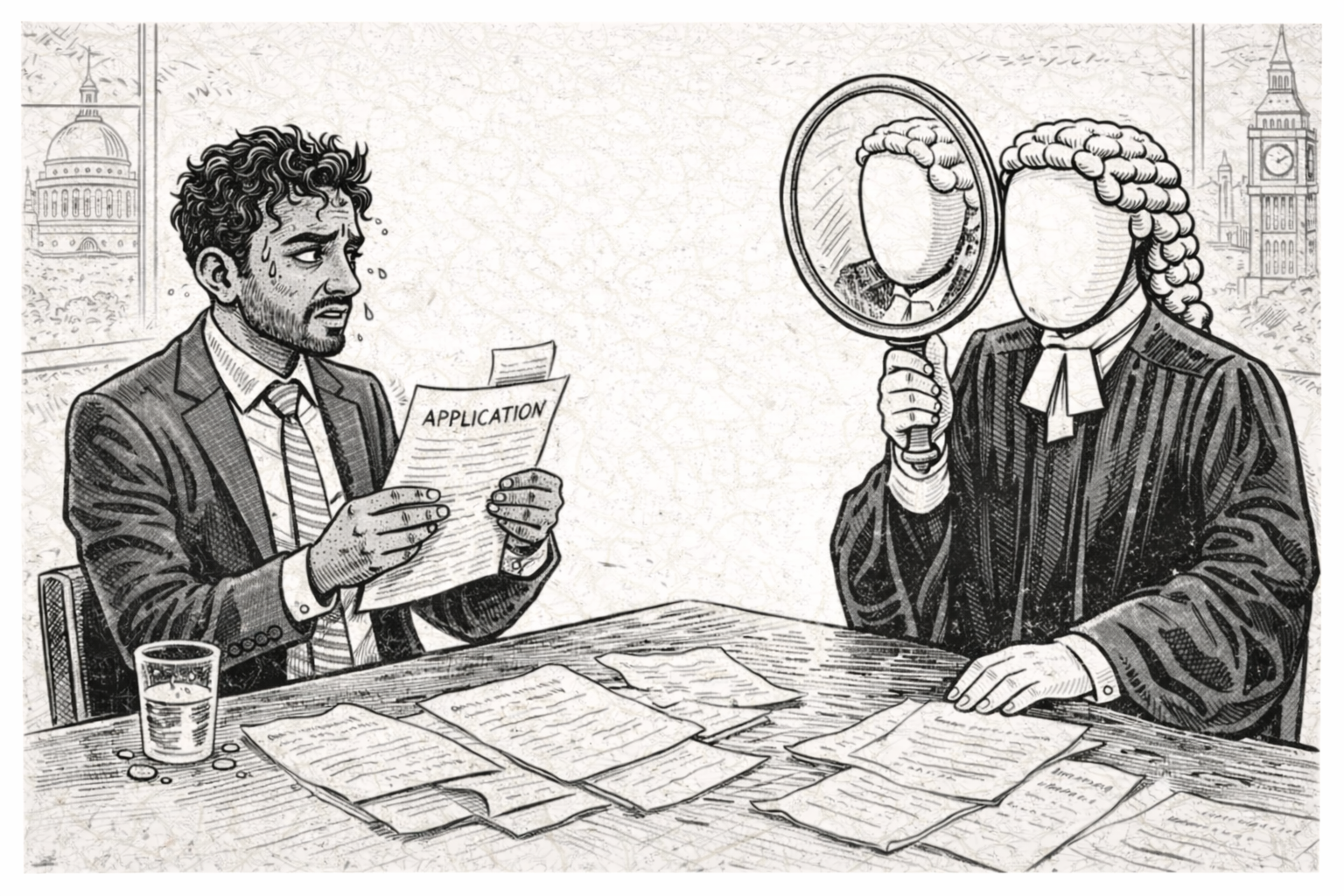
Interview Season
We are now well and truly in pupillage season proper, and for a lucky few interviews are looming ominously on the horizon - that is, if they haven’t been and gone already. I’ve been seeing a lot of questions about how best to prepare for FRIs/SRIs, so I thought I’d compile a nifty list of tips and tricks that I - and others - have found helpful when approaching them.
A brief caveat at the outset: I’m not going to get into the nitty-gritty of specific questions or attempt to predict what any given chambers might ask. That is rarely helpful and often misleading. Instead, this is about the general principles worth keeping in mind regardless of format or practice area.
From Form to Panel: Preparing for your Interview
So, you’ve got an interview - congratulations. Securing an interview is no small thing and, even if your application goes no further, it means that someone, somewhere read your form and thought you had the potential to become a proper barrister.
Unlike the written stage - where you have hours, days, or even weeks to refine an answer - an interview tests how you react in real time. The good news is that chambers are rarely looking for perfection. They are looking for potential, demonstrated through clarity, judgement, and composure under pressure.
Preparation therefore matters enormously, but it must be the right kind of preparation. Remember: Proper Preparation Prevents Pretty** Poor Performance.
Irritatingly (for the purposes of any guide to FRIs/SRIs), not every interview will look the same. For some sets, the first round may largely probe your application, focusing on what you have written and why. Others take a more robust approach, incorporating advocacy exercises or problem questions with limited preparation time. Helpfully, many chambers publish details of their process, or provide at least some indication of what to expect ahead of time - make use of that information.
Many have asked about interview practice schemes. The Inns often run mock interview programmes for candidates who have secured interviews - for example, Middle Temple’s scheme here. Beyond this, you can always enlist one or two friends and take turns probing each other’s applications. This works particularly well if at least one of you has prior interview experience.
KC: TBC - Not the Finished Article
Think of the interview as an opportunity to demonstrate, in real time, the advocacy skills and judgement you could only gesture towards in your written application. Chambers are not expecting the finished article, and the process is often deliberately designed to put candidates under a degree of pressure.
Stories circulate of candidates being handed a 50-page bundle and minutes to prepare a conference or hearing. Yikes. Exercises like these are not intended to catch you out; they are designed to test analytical ability, prioritisation, and your capacity to think clearly on your feet.
Don't Panic!
It is entirely normal to be nervous. Any panel will understand that you are standing there with your future career seemingly on the line. They're not there to cross-examine you. What they want to see, however, is that you can manage those nerves and get on with the task at hand - no client wants to see their advocate visibly flustered.
The best antidote to nerves is structure.
When you receive a question - whether you immediately know the answer or not - pause. Breathe. Take a sip of water if needed. Resist the instinct to rush. Instead, think about how you want to structure your response.
Think back to mooting. Avoid rambling. Signal your reasoning clearly: “This is the position I would advance, for three reasons: X, Y, and Z.” Even where you are unsure, a structured answer demonstrates control, judgement, and professionalism.
Beyond the Interview: Logistics and Survival Tips
A few general notes on attending the interview itself.
Arrive with time to spare - particularly if you are travelling to a different city. Give yourself margin for delays and the chance to settle before going in. Sleep well the night before and start the day unhurried; feeling rushed rarely helps anyone think clearly.
When you arrive at chambers, be polite to everyone you meet. Not only because it is the decent thing to do, but because chambers is a community that extends far beyond the barristers themselves - and impressions travel further than you might expect.
Dress appropriately and professionally, but most importantly, be yourself - not what you imagine chambers think a barrister should look or sound like (within reason). The profession is far broader, and often far more human, than applicants sometimes assume. You may be surprised by what passes for normal conversation at the Bar - I recently heard a barrister deliver a full 6/7 joke mid-discussion. Surreal, but reassuring.
After the interview, thank the panel for their time. If invited to ask questions, resist the temptation to manufacture one for the sake of it. Avoid anything easily answered by a quick Google search; a genuine question - or none at all - is perfectly acceptable.
Conclusion
There is no use sugarcoating it - pupillage interviews are stressful, and often difficult. But the panel is not there to catch you out. They are there to see how you think, how you communicate, and whether you are someone they could train, trust, and work alongside for the next two years and beyond.
You cannot control the questions you are asked, but you can control how you approach them: with preparation, structure, and calm judgement. Do that consistently, and you give yourself the best possible chance - whatever the outcome.